Water Damage Restoration Auburn, WA
24/7 water damage restoration in Auburn, WA. The restoration team extracts standing water, dries the structure to the IICRC S500 standard and documents every step for your insurance claim.
(888) 509-1696Water still spreading in Auburn? Call now.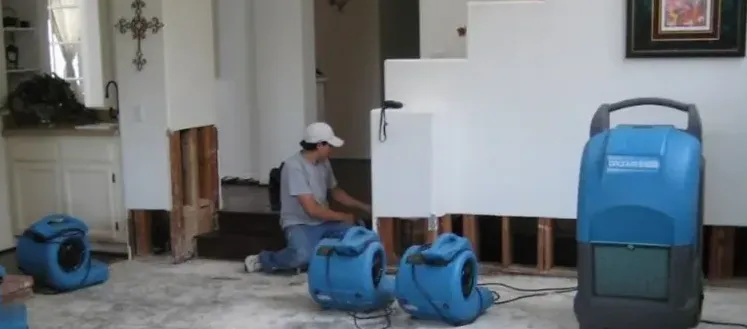
Water Damage Restoration Services in Auburn, WA
From the first extraction pass to the last moisture reading, fourteen water and sewage services across Auburn and the Green River valley.
 Stop 01Water Extraction & RemovalTruck-mounted extraction pulls standing water out before it soaks into subfloor and walls.View service
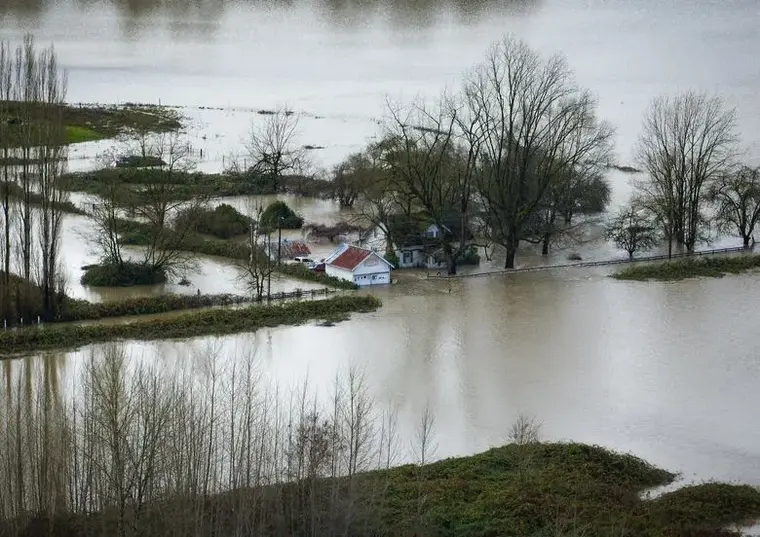
 Stop 02Flood & Storm Water CleanupRising water off the valley floor and Mill Creek, removed and dried as Category 3.View service
 Stop 03Crawl Space Water DamageWater under the house pumped out, wet insulation pulled and the joists dried.View service
 Stop 04Basement Flooding CleanupDaylight and full basements on West Hill and Lea Hill, extracted and dried.View service
 Stop 05Sump Pump Failure CleanupA dead or overrun pump during a long rain, cleaned up and dried to the goal.View service
 Stop 06Burst Pipe CleanupA pressurized line lets go: extraction first, then every wet cavity dried.View service
 Stop 07Frozen Pipe CleanupCold-snap splits in crawl spaces and outside walls, dried inside the cavity.View service
 Stop 08Roof Leak Water DamageWind-driven rain through the roof: attic, insulation and ceilings dried.View service
 Stop 09Ceiling Leak Water DamageUpstairs bath and supply leaks that soak ceiling drywall, traced and dried.View service
 Stop 10Water Heater Failure CleanupGarage and closet tank failures, extracted before the water travels.View service
 Stop 11Appliance Leak CleanupWasher, dishwasher, fridge and toilet lines that fail behind cabinets.View service
 Stop 12Structural Drying & DehumidificationAir movers, LGR dehumidifiers and daily readings to the S500 drying goal.View service
 Stop 13Sewage Backup CleanupCategory 3 backups contained, removed and treated in full protective gear.View service
 Stop 14Commercial Water DamageValley warehouses, offices and storefronts dried with the least downtime.View service
What to do while the water is still moving
- 1
Shut the water off at the main, often in the crawl space or at the meter box.
- 2
Switch off power to wet rooms, but only from a dry breaker panel.
- 3
Photograph every wet room before anything is moved or thrown out.
- 4
Lift rugs and belongings, then call: mold can start inside 24 to 48 hours.
Water damage restoration built for the Green River valley
Water behaves differently in Auburn. The valley floor holds groundwater through the wet season, and hillside homes on West Hill and Lea Hill sit on crawl spaces and daylight basements.
The Auburn restoration crew works with that in mind: moisture mapping before any equipment goes down, truck-mounted extraction, air movers and LGR dehumidifiers sized to each room, and daily readings until the structure is dry.
How the Auburn restoration team works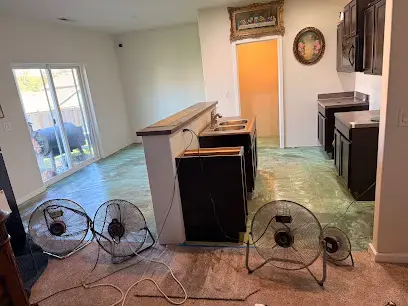
Water damage dried to the IICRC S500 standard
Every Auburn water loss runs on the same timetable; how long each stop takes depends on the water category, the material and the weather.
Walkthrough and moisture map
The tech who does the walkthrough finds the source and maps every wet wall, floor and cavity before any equipment goes down.
Extraction
The extraction crew pulls standing water so it leaves the building instead of moving to the next room.
Drying setup
Air movers go in at the evaporation load of each room, with dehumidifiers pulling that moisture back out of the air.
Daily readings
The drying team logs temperature, humidity and material readings daily and moves equipment to where the water still is.
Dry verification
Equipment comes out when wet materials read within 2 to 4 points of a dry reference, and the logs go into the claim file.
How a water loss is handled in Auburn
What separates a finished dry-out from a cosmetic one is the order of the work and the readings behind it.
Rapid local response
Auburn water damage restoration experts work around the clock, and the response team rolls with truck-mounted extraction, air movers and moisture meters already on board.
IICRC S500 drying standard
IICRC S500 is the industry drying standard. The drying team runs structural drying, not just surface drying, and the equipment stays until the readings say dry.
Claim-ready documentation
A moisture map from the first walkthrough, daily psychrometric logs and timestamped photos taken before any demolition: the file an adjuster works from.
Green River valley water experts
Crawl spaces on the valley floor, daylight basements on West Hill and Lea Hill, and long wet-season rains: the Auburn restoration crew knows where water settles in a Puget Sound house.
What does water damage restoration cost in Auburn, WA?
In Auburn, WA, water damage restoration typically runs $800 to $10,000 or more. The range depends on the water category (clean, gray or black), how many square feet got wet, the material class and how fast drying started.
One area, clean water
- Supply line or appliance leak
- Extraction and air movers
- Three to four days of readings
Several rooms or a crawl space
- Pad, baseboard or insulation removed
- Wall cavity and joist drying
- LGR dehumidifiers and daily logs
Flood, sewage or a large loss
- Category 3 containment
- Flood cuts and porous removal
- Extended structural drying
These are typical ranges, not a quote. For a closer planning number try the water damage cost calculator or the drying-time estimator.
All water damage categories covered in Auburn, WA
Clean water
Burst supply lines, water heaters, appliance hoses. Extracted and often dried in place.
Gray water
Washer drains, dishwasher overflows, sump backups. Soaked pad and some finishes come out.
Black water
Sewage and outside floodwater. Contained, porous materials removed, then treated and dried.
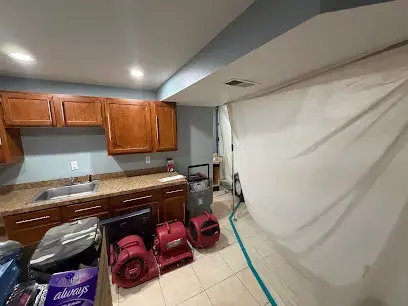
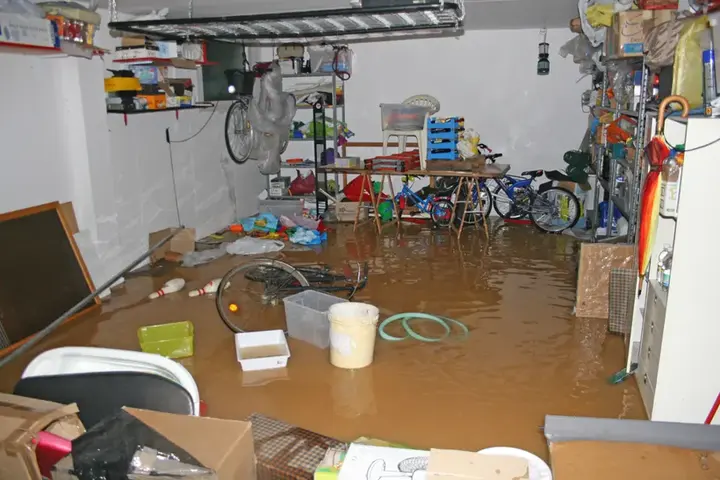
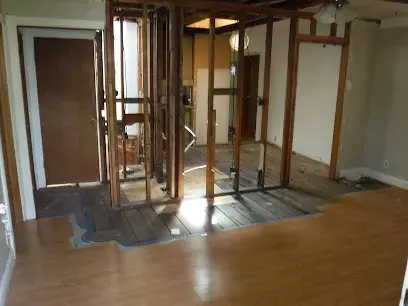
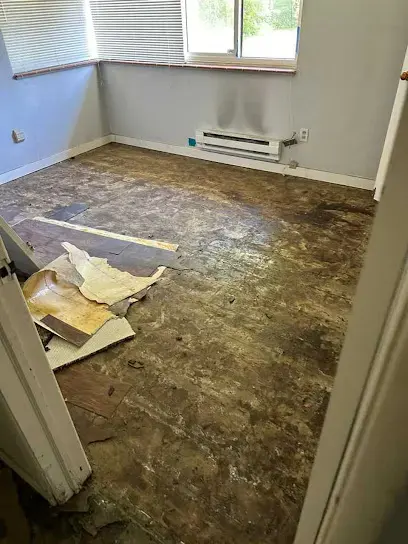
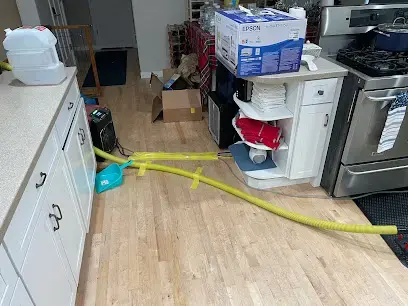
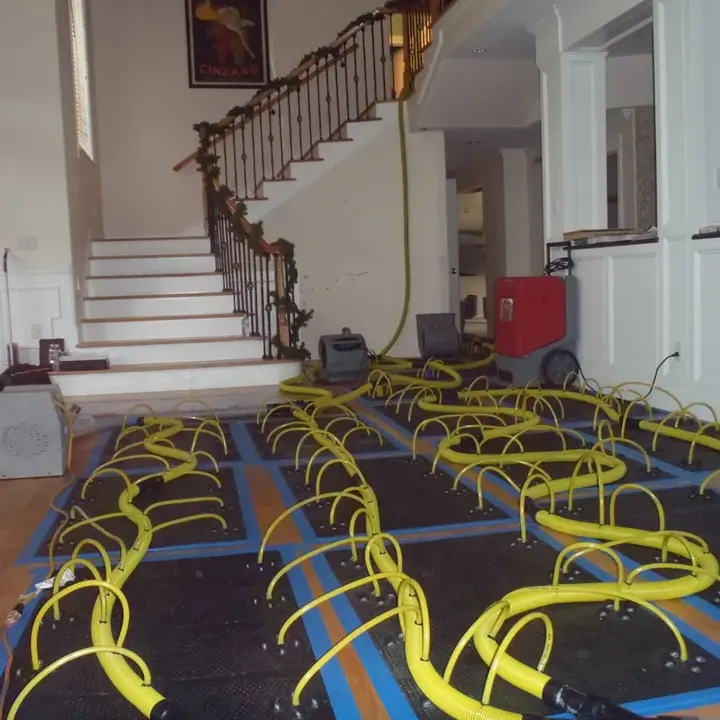
Sewage backup cleanupWhat a water damage dry-out looks like in Auburn
Documentation for your insurance claim
A water claim is decided on the file. The restoration team builds it from the first walkthrough to the last reading.
- A moisture map from day one showing every wet wall, floor and cavity
- Daily psychrometric logs and material readings until the drying goal
- Timestamped photos taken before any demolition or removal
- The category and class of the loss and a line-item scope
Sudden and accidental water, such as a burst supply line, is treated differently from rising flood water. Coverage depends on your policy, so it is worth checking with your own insurer.
Water damage coverage across Auburn, WA
Auburn spans the Green River valley floor, West Hill, Lea Hill and Lakeland Hills. The water damage restoration experts cover all of it, plus the cities on every side.
Auburn ZIP codes
Neighborhoods
Nearby cities
Water damage in Auburn, WA: the local risk profile
Auburn sits where the Green River leaves the foothills, with Mount Rainier on the skyline and close to 40 inches of rain a year. A few conditions drive most local water losses.
- Groundwater rises on the valley floor from October to March and fills crawl spaces near the Green River and Mill Creek.
- Atmospheric river storms stall over the Cascades, saturate hillside soil and push water into daylight basements.
- Early 1900s to 1950s homes near the old rail yard still carry galvanized supply pipe and cast iron sewer laterals.
- Rare Arctic cold snaps split pipes in vented crawl spaces and exterior walls built for mild winters.
Auburn water damage questions, answered
How fast can water damage help get started in Auburn?
Auburn water damage restoration experts work 24/7, and extraction can usually start the same visit as the walkthrough. Water keeps spreading into subfloor, drywall and the crawl space, so the first call matters more than the first repair.
What should I do first while the water is still moving?
If it is safe, shut the water off at the main and switch off power to wet rooms from a dry breaker panel. Stay out of standing water near outlets, photograph the damage before moving anything, lift rugs and belongings, then call.
Is water damage covered by insurance in Washington?
A sudden, accidental loss like a burst supply line is often covered after the deductible, while rising flood water usually needs a flood policy. Coverage depends on your policy, so it is worth checking with your own insurer.
Why do so many Auburn homes get water under the house?
Much of Auburn sits on the Green River valley floor, where the water table rises from October to March, and many hillside homes sit on vented crawl spaces where groundwater and slow leaks collect.
How long does it take to dry a wet house?
A contained Class 1 or 2 loss usually dries in three to five days; hardwood, plaster and concrete take longer. Equipment comes out when the readings say dry, not on a set date.
What is the IICRC S500 standard?
IICRC S500 is the industry drying standard for water damage restoration. It calls for moisture mapping before equipment goes down, drying sized to the class of the loss, and daily monitoring until the drying goal is met.
What is the difference between mitigation and repair?
Mitigation is the emergency part: extraction, removal of what cannot be saved and structural drying. Repair, such as new drywall, paint and flooring, starts after the structure reads dry.
When does drywall have to come out?
When it was touched by Category 3 water such as sewage or floodwater, when it sagged or crumbled, or when it stayed wet too long. Drywall wet with clean water and caught early can often be dried in place.
Why is sewage handled differently?
Sewage is Category 3 the moment it backs up. Porous materials it touched are removed, the area is contained with HEPA air scrubbers, and surfaces are treated with an EPA-registered antimicrobial before drying.
How is the cost of water damage restoration calculated?
The main drivers are the water category, the square footage that got wet, the material class and how fast drying started. The cost calculator gives a planning range.
24/7 water damage restoration across Auburn, WA
From the valley floor to Lea Hill and Lakeland Hills, the extraction crew and the drying team work every Auburn ZIP, day or night.